


What Does Child Counselling Actually Mean?
Child counselling is a supportive process designed to help children understand and express emotions, behaviour and experiences that may be difficult for them to communicate clearly. Children do not always say, “I am anxious,” “I feel insecure,” or “I am struggling.” Instead, those feelings may appear through anger, withdrawal, fear, stubbornness, low confidence or changes in behaviour. A child counsellor looks beyond the visible reaction and explores what may be happening emotionally. The goal is not simply to stop a behaviour, but to understand what the child may be trying to communicate and help them develop healthier ways to express themselves.
How Do You Know When Your Child May Need Counselling?
Every child has difficult days, so occasional anger, sadness or worry is normal. What parents should pay attention to is whether a concern continues, becomes more intense or starts affecting the child’s school life, friendships, confidence or behaviour at home. Frequent emotional outbursts, excessive worry, withdrawal, sudden behaviour changes, school stress, low confidence or difficulty communicating can be signs that a child may benefit from additional support. Seeking counselling does not mean you have failed as a parent or that something is seriously wrong with your child. It simply means you want to understand the concern before it becomes harder to manage.
Is Difficult Behaviour Always Just “Bad Behaviour”?
Not always. Behaviour is often one of the first ways children show that something is difficult for them. Repeated anger, stubbornness, withdrawal, crying, aggression or emotional reactions may be connected with frustration, anxiety, fear, school pressure, family changes or difficulty communicating feelings. Child behaviour counselling focuses on understanding what may be behind the repeated pattern. Once the possible trigger becomes clearer, parents can respond more thoughtfully and the child can begin learning healthier ways to express what they feel.
What Happens During Counselling
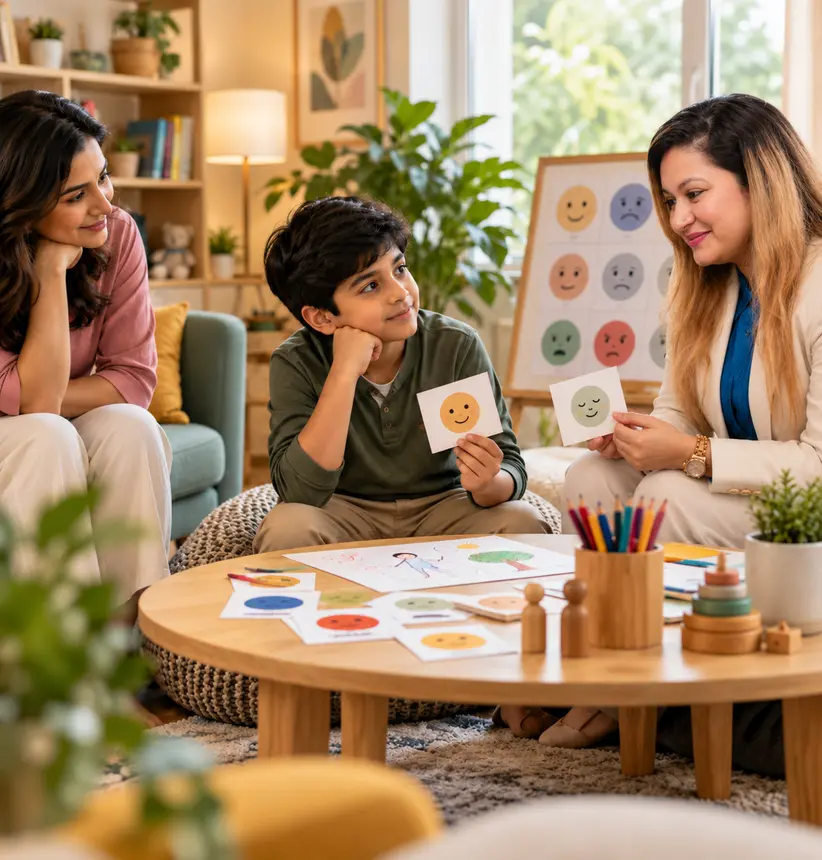
Counselling does not begin by immediately telling a child what to do. The process starts with understanding the concern, the child’s age, behaviour, emotions and the situations in which difficulties usually appear. The child is given a supportive, age-appropriate space to communicate at a comfortable pace. Depending on the concern, counselling may focus on emotional awareness, communication, anxiety, anger, confidence or behaviour patterns. Parents may also be involved when their observations or support at home can help. This allows counselling to address both what the child is experiencing and the environment around them.
Why Parent Involvement Can Make a Real Difference
Children do not experience emotions only during counselling sessions. Their everyday environment, routines and conversations at home also matter. Parents can support progress by listening before reacting, noticing emotional triggers, maintaining clear but healthy boundaries and giving the child space to talk without immediately correcting or dismissing their feelings. Parent-child counselling can also help when communication has become difficult or repeated conflict is creating distance. Better understanding between parent and child can make it easier to manage challenges together and help the child feel safer sharing concerns.